
There are mornings in the Sta. Rita Hills when you can stand in a vineyard and see no more than a few feet in front of you. The fog is so thick that you feel as though you are standing inside a cloud. I find those mornings magical.
In these journal entries, I have written about the vineyards, the harvests, and the wines taking shape in the cellar. I have never told the story of the name.
AERILYN came about in the late fall of 2024, well after our first harvest. I had struggled for months on my own to find the right name. I eventually began working closely with a beverage consultant on our marketing and visual identity, including the logo and website. I asked her to help me find a name: an ode to what makes the Sta. Rita Hills capable of producing world-class sparkling wine. We workshopped many possibilities, but none of them fit.
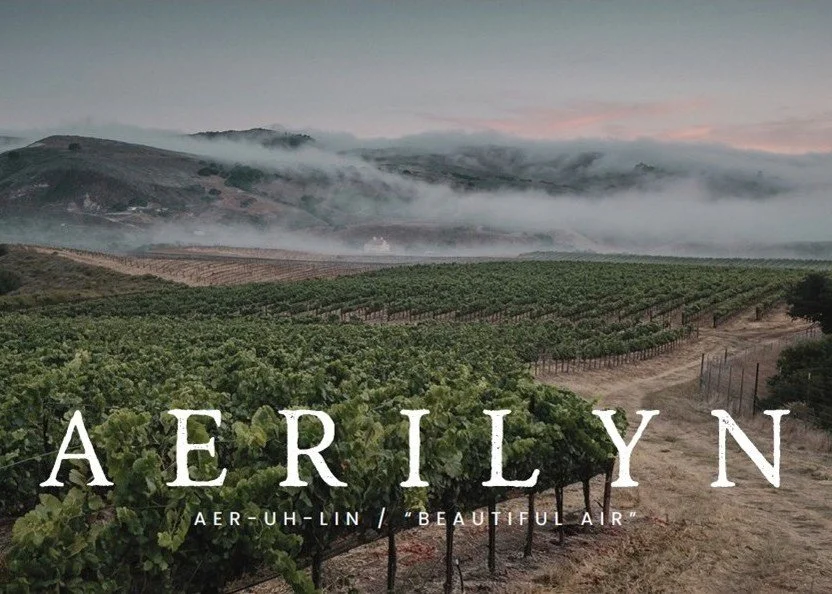
Then she suggested a name built from two roots. AERI comes from the Greek word for air, and LYN was chosen for its association with beauty. Together, they gave us AERILYN. Beautiful air. It clicked for me. Simple, pretty, and true to something that happens here every day.
The Sta. Rita Hills is one of the few valleys along this coast that runs east to west, opening directly to the Pacific. Marine air moves inland through the valley, cooling the days and bringing substantial swings in temperature between day and night. These conditions extend the growing season, giving the grapes time to develop flavor while holding the natural acidity that sparkling wine requires, even at low sugar levels.
But the air does not reach every part of the valley in the same way. Fog lingers in the west and burns off earlier in the east. Vineyards within the same appellation can ripen on very different schedules.
We saw that range across this year’s harvest. Our westernmost site remained under cloud until noon during the week leading up to our first pick. At Fiddlestix, farther from the ocean, temperatures reached 100°F that same month, and we picked at 2:45 in the morning to get ahead of the heat. When the fog returned at the end of July, cooler conditions kept our final block on the vine into August.
Five base wines are now in barrel for their winter rest. The lots from the fog-heavy west are linear, with vibrant natural acidity; those from the warmer east are fleshier, with more breadth and weight. We taste each lot every month through March. When blending begins, those differences will guide the final blends. The air that shapes the growing season ends up in the bottle.
I still find myself standing in the fog, watching it drift through the vines. I never quite get over how the air transforms this landscape.
Ever curious,
Tammee